Historical names

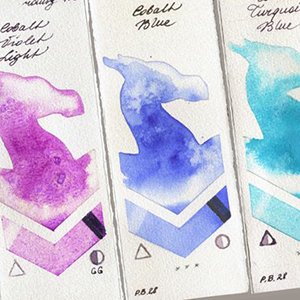
Cobalts

Why do cobalt paints have different colors?

(1 min read)
Hue and Permanents

(4 min read)

Rose Madder

(3 min read)

Hooker’s Greens

(1 min read)

Van Dycks

(1 min read)

Payne’s Greys

(1 min read)

Jane’s Grey and Jane’s Blacks

(1 min read)

Purples

Lemons

Ceruleans

Scarlets

Crimsons

Olives

Indigos

Magentas

Viridians

Ivorys

Vermilions

Royal and Imperials

Maroons

Greenish and Bluishs

Lavenders

Aureolin and Aureolines

Jaunes

Seas

Lilacs

Potter’ss

Emeralds

Verditers

Mauves

Sulfur pigments, Aluminosilicates, Ultramarines

Quinacridones

Is Quinacridone Gold discontinued for good?

Cadmiums

Coppers: Phthalocyanines

Iron oxides: Umbers, Siennas, Ochre, Prussian Blue, and Caput Mortuum

Manganese

Carmine

Titaniums

Chromiums

Carbons

Sienna

Ochre

Umber

Coppers

Phthalocyanines

Naples Yellows

Prussian Blues

French Ultramarine, Ochre, Cerulean, and Vermilions

Venetian Red and Yellows

Gamboges

English Reds

Cyprus Umbers

Indian Red and Yellows

Burgundy Red and Yellows

Italian Sienna, Ochre, and Reds

German Umbers

Lunars

Mars

Genuines

Earth and Terres

Saps

Sepias

Operas

Graphites

Buffs

Neutral Tints

Perylenes

Azos

Alizarins

Pyrroles

Nickels

Pyrrols

Hansas

Bismuths

Dioxazines

Lakes

Indanthrone and Indanthrenes

Grey and Gray, Brown, Forest, Shadow, Urbans

Gold and Goldens

Turquoise, Azure, and Teals

Pinks

Skys

Malachites

Chinese White, Orange, and Reds

Pompeii Reds

Bordeauxs

Isoindolinones

Deep, Medium, and Light colors

Raw and Burnt paints